
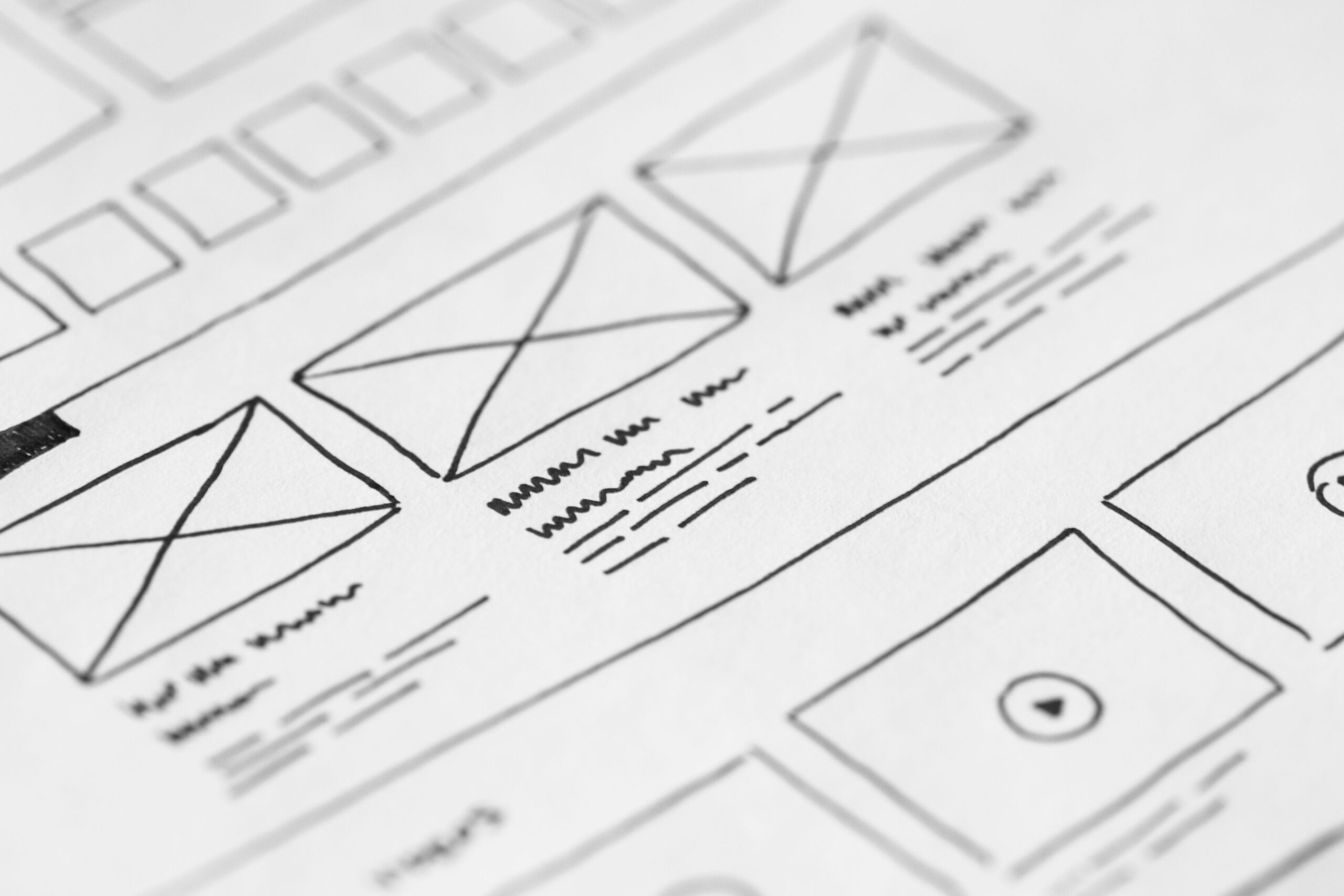
This is one of the earliest structural decisions in building a website, and it’s easy to get pulled toward whichever format looks more modern rather than whichever one actually fits the business. Both formats work well, just for genuinely different situations.
Direct answer: a one-page website suits a business with one clear offer, one audience, and one simple next step, such as a single service provider or an early-stage business testing an idea. A multi-page website suits a business with multiple services, distinct customer types, or ambitions to rank for a range of search terms over time. Most established small businesses outgrow a one-page format eventually.
What each format actually is
A one-page website holds all its content on a single page, with navigation links that scroll a visitor to different sections rather than loading new pages. A multi-page website spreads content across separate pages, typically a homepage, about, services, and contact at minimum, each addressing a distinct topic or need.
When a one-page site makes sense
A one-page format works well when your offer is simple enough to explain in one continuous story, and you have one clear action you want every visitor to take. It suits:
- A single service provider with one core offering
- An early-stage business or a test launch before committing to a full build
- A referral-driven business that doesn’t rely heavily on search visibility
- A simple campaign, event, or product launch page
The strength of a one-page site is focus. There’s no menu decision to make, no risk of a visitor getting lost in navigation, and the whole story builds toward a single conversion point.
When a multi-page site makes sense
A multi-page format suits a business with more to say than one page can comfortably hold, or ambitions that depend on search visibility across a range of terms. It suits:
- Businesses with more than two or three distinct services
- Businesses serving genuinely different customer types who need different messaging
- Any business relying on organic search for a meaningful share of enquiries
- Businesses planning to add a blog, case studies, or location pages over time
If you’re building out a multi-page structure, our guide on essential pages every small business website needs covers exactly what those core pages should be.
The trade-offs compared
| Factor | One-page | Multi-page |
|---|---|---|
| Search visibility | Limited, competes for a narrow set of terms | Stronger, each page can target its own terms |
| Speed to launch | Faster, less content and structure to plan | Slower, more content and structure needed |
| Maintenance | Simpler, one page to keep current | More involved, several pages to maintain |
| Best for | A single, simple offer | Multiple services or growing ambitions |
| Mobile experience | Naturally suits scrolling behaviour | Can work well too, if navigation is kept simple |
Does a one-page website hurt SEO?
It genuinely limits it, rather than ruling it out entirely. A one-page site can rank for a narrow, focused set of terms tied closely to its single topic, but trying to target a wide range of keywords on one page becomes difficult, since each page normally carries its own distinct relevance signal. If organic search matters meaningfully to your business, a multi-page structure has a real, lasting advantage.
Can you start with one page and grow later?
Yes, and many small businesses do exactly this. Starting with a focused one-page site to launch quickly, then expanding into a multi-page structure once the business and its content needs grow, is a reasonable path. The main thing to plan for in advance is choosing a platform and theme that can support that expansion without a full rebuild later. Our guide on choosing a WordPress theme for a small business covers what to look for if flexibility matters to you from the start.
A simple way to decide
Ask honestly: do you have more than one distinct service or audience to address? Does organic search matter to how customers find you? Do you expect to add content, such as a blog or case studies, over time? A genuine yes to any of these points toward multi-page. A clear no across the board, paired with a simple, single offer, makes a one-page site a perfectly reasonable choice.
FAQs
Is a one-page website bad for SEO? Not bad, but limited. It can rank for a narrow, focused set of terms, but a multi-page site has a clear advantage if you need to rank for a wider range of searches.
Can I add more pages to a one-page website later? Generally yes, though it depends on your platform and theme. Choosing a flexible foundation from the start makes this transition smoother if you expect to need it eventually.
Is a one-page website cheaper to build? Usually, since there’s less content, structure and page design involved. Our guide on website costs for a small business covers how page count affects pricing across different routes.
Which format works better on mobile? Both can work well if properly designed. One-page sites naturally suit scrolling behaviour on mobile, while multi-page sites work equally well provided the navigation stays simple and isn’t overloaded with menu items.